Showing posts with label Firefly. Show all posts

Sunday, July 21, 2019

On Being a Referee and a Christian

In my extended absence from writing anything on my blog, I recently got this comment from David B. and it deserves its own post:
Greetings Father. I don't know exactly where to post this but I had question for you regarding the cosmological portion of your universe. I'm running a West Marches game type since last year and, I'll be honest, I stole your three main divinity when I read about them (Frumos, Arta and Tizan). I think it's great.

I'm playing with friends used to D&D and such so it's all good. But I was wondering about the long-term: my wife and I will have children, and I want to use D&D as a game and an educational tool. What would be the thing to do regarding the world and the cosmology of it ?

Pseudo-historical RPG set in Christian kingdom/mpire ? Analogical/allegorical like yours ? Or straight up remote to create a form of mythopoesis like Tolkien ?

Which one do you think has more value ? The goal is not to teach the creed through the game, that I understand very well, but mostly to make sure that the background imagination landscape, so to speak, it cohesive with the whole of education. What do you think ?

Thank you.
First of all, thank you for letting me know that you have implemented one of my various attempts at a metaphorical trinitarian cosmology. Not only do I think it’s awesome, it makes me really happy that it’s being used in actual game play by someone not me. Again, thank you!

To get to your question, let’s compare the Bible, C.S. Lewis and J.R.R. Tolkien. All three take different approaches to infusing God and Christianity into their stories. All three tell terrific yarns. All three plant the seeds of Christian values. So the answer really isn’t about which approach works best. Rather, in context of playing an RPG, what is going to be the most fun for you and your players, because fun games get played. The longer a game gets played, the more you and your players get to wrestle with God at the gaming table.

Personally, I find that players like the approach you and I generally use at the table — we use a metaphor for the Trinity and as a stand-in for the Christian Church. This makes the fantasy world approachable. Not only is it familiar (it feels a lot like institutions we already have in the real world), but it is alien enough that we aren’t obligated to engage in a real-world kind of way. Devout Christians can explore characters that make choices they would be reluctant to if we were actually invoking the name of Christ. Secularists and atheists can explore religious characters because they don’t feel obligated to reject Christ and His Church as they do in their own life.

Once players bypass their own real world prejudices, it gives everyone the freedom to explore the moral landscape of human experience with little of the real world consequences. To make this work, you as the Referee need to consistently offer your players the freedom to do what they want, but be firm with the consequences of those choices. The only time I Refereed an actual TPK was when the first level thief decided to try out his Pick Pocket skills and got caught. Then the rest of the party decided to try and fight their way out of the situation. That group of players was a lot more cautious about following the laws while in town after that.

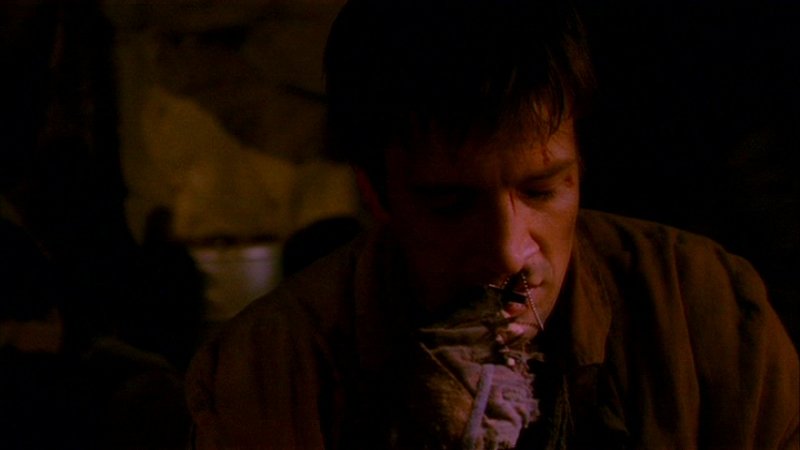
The other thing that makes campaigns like this interesting is offering moral dilemmas — situations that have no right answer. Introduce NPCs like the Operative from Serenitypeople who know they are monsters doing monstrous things for the greater good. Which is worse, allowing these NPCs to be monsters or allowing the greater evil they are keeping at bay to have one less obstacle to getting their tentacles into Civilization?

In this way, you allow players to embrace the image and likeness of God and to wrestle with God. Freedom and consequence, when done consistently and well, will go a long way to making your game fun and something people will want to come back to. Moral dilemmas will also not only be fun, but will be chewed on for years to come.

I hope that helps.

Tuesday, May 22, 2012

Gamer ADD: Meditating on a Traveller Campaign

Over the weekend, Library Bob, a fellow Orthodox Christian and gamer dropped me a comment on an older post of mine ostensibly about Traveller. He writes his own blog that occasionally touches upon his own Traveller game and was interested in tying his Orthodox musings to his Traveller musings.

I found the idea intriguing enough that a bit of Gamer ADD has had me thinking about how I would run a Traveller game and the themes I might bring to the table. Let me begin by noting that a really good starting point for this discussion is the tragically cancelled Firefly (created by Joss Whedon, the genius behind the success of the Avengers) and one of the greatest sci-fi TV shows of all time.


The reason being, Firefly plays with Christian themes and has Christian characters — including the main character Mal (despite his protestations to the contrary). In other words, sci-fi, Christianity and Christian themes are not only complementary, but can create some really great stuff.

So, here is a short list of themes and ideas that I would use as the basis of a Traveller campaign.

Outer Darkness

I have spoken on this blog a lot about the dynamic between the Chaotic/Demonic Wilderness vs. Lawful/Christian Civilization in D&D. This theme can easily be modified to fit into a sci-fi setting. In the history of the Orthodox Church, the Wilderness is normally associated with the desert — a stand-in for the Land of Nod where demons reside. It is the place where monasticism flourishes — where Christians of all ages have taken the offensive in the spiritual war against the devil and his minions.

In a world where entire planets are civilized and even terraformed, the new desert will be outer space. The Wilderness will be unexplored planets in the outer darkness. I have long wanted to include a monastery inside a giant asteroid in an asteroid belt in a sci-fi campaign, for example.

The key for this to work, however, is having some kind of demon. In D&D the are a plethora of monsters. Curiously, Traveller has always been human-centric even when it comes to its aliens (more on that in a bit) so this requires a bit of imagination. Firefly, though, has a great bit of inspiration — the Reavers.

If one is willing to deviate from canon and if used properly, the Zhodani could also play this role quite well.

What is Humanity?

One of the reasons I love the Third Imperium as a sci-fi setting is that it confronts the reality that the greatest alien is us. The idea that when humans finally make first contact, they come face to face with themselves is genius.

It forces us, as players, to confront the question what makes a human human? Is it culture? Is it genetics? Is it the ability to create a Jump Drive? The fun part of asking this question (from a gaming perspective) is that if one limits that answer to any sort of category (and there are plenty of those available to one playing in the Third Imperium), it opens the flood gates of conflict.

Historically, any time we take one aspect of the totality of what it means to be human and elevate it above ever other aspect, it always ends badly. Nationalism, fascism, communism, slavery and racism are all examples of this. Playing aspects against each other is a great way to generate adventures and even entire campaigns.

Having the Solomani Confederation as a central part of a campaign is a great way to play with this theme. I have always been fascinated by the cultural conflict within Solomani space between its fierce independence, its racial pride and its totalitarian impulses through the ubiquity of the Solomani Party.

Adding non-human aliens to the mix just makes the question more complicated. What is their place in God’s plan of salvation? How does Christ’s humanity speak to these alien species? Does his taking on human nature exclude them — again what is humanity?

Who is God?

This is closely related to the question What is Humanity? due to the nature of Christ, who is both God and Man. In a setting that has an ancient alien race that toys with genetics and seeds worlds throughout the galaxy with humans and elevated animal species, one is tempted to doubt that there is a God who created all things.

This doubt is a fantastic source for campaign ideas. There will be NPCs, planets and entire regions of space that will deny the existence of God. This denial leads people to try to replace God with themselves. As it has throughout human history, this course of action results in disaster of one kind or another. For example, take a look at the death toll of Communism and Fascism in the 20th century.

Firefly plays with this theme with its conflict between the inner and outer worlds. When, as is revealed by the movie Serenity, the inner worlds try to play God, bad things happen.

The Solomani Party has much in common with the Communists and Fascists. Therefore, they are a great way to play with this theme. If one has the Zhodani using psionics has an excuse to replace God with themselves, this can add a level of depth to both the psionic suppression and the Frontier Wars.

Patrons

One of the best ways to run a Traveller campaign is via Patrons — the folks who hire the players to do their dirty work. This, frankly, is one of the best ways to introduce Christian elements into the game. Patrons can be Christians (like those monks who live inside an asteroid). Or they can be those who work against Christians (like a politician who wants to prevent an important Christian relic from reaching a region/planet that the politician is having a hard time controlling/wants to take control of and sees the relic as key to his/her goal).

Grrr. Now I want to play Traveller.