Showing posts with label demi-humans. Show all posts

Thursday, June 4, 2020

Human Monster Stats in B/X

I was recently asked by an old buddy of mine to look at how D&D stats up humans as monsters to see what that said about the game and by implication the game world. Given my proclivities I thought it might be an interesting exercise. The first place I went was Moldvay, not only because his is my favorite version of D&D, but because I know that humanity is well represented in the Monster Section.

I decided to make a chart for easy comparison. I threw in Dwarves, Elves, and Halflings because all of them are PC classes in Basic and I included Gnomes because I like them and I thought it would be interesting.

Click to Embiggen

Hit Dice

One of the first things that jumps out to me are the Hit Dice. In Basic D&D all monster HD are d8. Therefore, most human and demi-human monsters have a higher HD than their PC counterparts. I think this is a hold-over from 0e, where all PCs had a d6 for a hit die. Interestingly, Berserkers and Elves are the only “fighting men” that retained the ‘+1’ given to the HD of that class in the original rules.

Damage

The second is the amount of Damage each type of “monster” does. Outside the Acolyte’s preference for using a mace, this suggests a universal damage die based on class where Fighters do d8, Clerics and Thieves do d6, and Magic-users do d4.

Armor Class

Also fascinating is the Armor Class. Basic D&D doesn’t assume or assign Ability Scores to monsters. Indeed, Moldvay suggests that DMs “may” want to roll ability scores for NPC parties. As a consequence, it can safely be expected that all of the human and demi-human “monsters” have ability scores that fall within the ±0 range of 9-12. Thus, the armor class of each entry tells us something about what armor a particular “monster” is using. The results are fascinating from both a cultural point of view and as a comparison to the rules for PC classes that these monsters emulate:

  • Acolytes (AC 2) wear plate mail and shield. This reveals that the average 1st level cleric is much more likely to be a Knights Templar than a village priest. In other words, it appears that the primary role of the cleric is fighting, not necessarily praying.
  • Bandits (AC 6) wear leather and shield. This suggests that Thieves actually do know how to wield a shield counter to what the rules for PCs say.
  • Berserkers (AC 7) wear only leather. Due to their battle rage, Berserkers are the most monster-like entry on this list; however, from the perspective of the Tinkerer in me, this entry also suggests another option for a fighter class — one that lives by the axiom that offense is the best defense. By forgoing the ability to wear armor heavier than leather, this new fighter-type attacks as a fighter 3 levels higher and gains one extra hp per HD. Alternatively, maybe all Fighters get that 0e +1 to their HD and receive a bonus "to hit" based on their Movement Rate: 120 (40) = +2; 90 (30) = +1; 60 (30) = 0.
  • Dwarves (AC 4) wear chain and shield. Notice their movement rate. Based on the movement rates of others on this list wearing plate mail, one would expect an AC of 2. This suggests that Dwarves have a base move of 90 (30) instead of 120 (40). Thus, chain is the heaviest armor they bother to train with because plate mail not only slows them to 30 (10), but prevents them from carrying any gold. Another option is suggested by the Gnome below. Maybe Dwarves fill the roll of Fighter/Thief and they have access to the same type of quiet chain that Gnomes do.
  • Elves (AC 5) wear chain. Firstly, this suggests that it requires two hands to cast magic, therefore Elves don’t use shields. Secondly, look at the movement — 120 (40). Either chain mail has the same effect on movement as leather, which is contradicted by the entry on Dwarves, or all Elves have access to a special type of Elven Chain that weighs as much as leather.
  • Gnomes (AC 5) wear chain. Note that gnomes have the same movement as dwarves but do not use shields like elves. This suggests that gnomes have a reason to keep both hands free like elves. Given the lower damage die (d6) suggests that gnomes fill the roll of Magic-user/Thief in the same way Elves are Fighter/Magic-users. The fact that they can wear up to chain and are not limited to leather like Bandits suggests that they, like Elves, have a special type of chain. While not light like Elven Chain, Gnomish Chain is quieter than normal chain.
  • Halflings (AC 7) wear leather. The Halfling is an outlier. The AC, HD, Move, and Damage all compare unfavorably with the other entries. Given my own bias, I would be tempted to dump the Halfling as a character type; however, given that the lack of a shield has been used to justify spell casting, the Halfling may very well play the roll of Cleric/Thief despite the fact that both of those classes are allowed to use a shield (a nod to the better saving throws?)
  • Mediums (AC 9) wear no armor. No surprise here; however, it does go to show that these “monster” versions of the class are considered to have ability scores of 9-12 (no implied AC bonus).
  • Noble (AC 2) wear plate and shield. Again no real surprise, but it does suggest that nobles are not only expected to fight but that there is a need to.
  • Normals (AC 9) wear no armor. The only real surprise here is just how incompetent at fighting normal humans are with the d4 HD, low saving throw and lowest morale of all the entries. This is especially shocking when compared to the other races. This suggests that humans are prosperous and numerous enough to have the luxury of professional armies to protect them. Given that every other entry on this list is at least as competent as a goblin or orc (and often better), there seems to be a real need for armed conflict.
  • Traders (AC 6) wear leather and shield. What I find fascinating about this entry is that they are specifically described as Fighters, despite the fact that statistically they more resemble Bandits than Veterans. Does this suggest another fighter-type that forgoes both offense and defense for a variety on non-combat abilities? Or, does this simply suggest that a Thief is a fighter who gave up on fighting in order to pursue other mundane skills? Interestingly, the Saving Throw seems to suggest the former.
  • Veterans (AC 2) plate and shield. No real surprise here also, other than the fact that plate mail is so common among those that society expects to fight.

Morale

Morale also tells an interesting story. Most humans have a Morale of 7, whereas most demi-humans (Halflings being the outlier again) have an 8 that increases to 10 if their leader is still alive and kicking. Rather than speaking to a level of professionalism, as is suggested by the Veteran’s Morale of 9 versus the Noble’s Morale of 8, it suggests a level of desperation. Whereas humans have a place to retreat to, most of the demi-humans do not.

Treasure Type

The story suggested by Morale is reinforced by the Treasure Types. All of the human entries (as well as the Halflings) list individual Treasure Types. If a normal Treasure Type is listed, it only exists “if encountered in the wilderness.” In contrast, there are no Individual Treasure Types for Dwarves, Elves, and Gnomes. The implication is that when one of these demi-humans is encountered they are not very far from home and hearth.

Movement Rate

I find it interesting that the Movement Rates of all these monster entires contradict the normal encumbrance rules. Moldvay has leather armor at 90 (30), and metal armor at 60 (20). These entries support the idea that both unarmored and leather should be 120 (40), chain should be 90 (30) and plate should be 60(20).

Alignment

I find it fascinating that Normal humans (most often) have a Lawful Alignment. The suggests that the Alignment System centers not on morality but where one stands with Human Civilization. The fact that most human monster entries indicate that they can be any alignment says more about the fickle nature of humanity than anything else. This concept of Alignment is confirmed by the Neutrality of Dwarves, Elves, and Gnomes. While willing to work with humans, they don’t necessarily support their Civilization. Note, that Dwarves and Gnomes seem to be split on the question, though. Once again, the outlier here is the Halfling. Like Normal humans, they are Lawful. This makes me wonder if there is more of a connection between the two than the monster entries are letting on.

Monster Descriptions

There are a couple of interesting tid-bits in the descriptions of all these entries. Almost all of them refer to leader types of up to 8th level. The exceptions are not surprising: Berserkers, Normals, and Traders. What is surprising is the levels of the various leader types. Nobles are "always 3rd level," Veterans max out at 3rd level, Bandits have leaders from other classes, and (most shockingly) Mediums have a 50% chance of being encountered with their Master — a 3rd level Magic-user! 

In contrast, Gnomes have leaders up to 4th level, Clerics up to 5th, Elves and Halflings up to 7th, and Dwarves up to 8th. 

I think this speaks to the relative youth of Human Civilization and the fact that magic is largely unknown. Both Acolyte and Medium leader types can't cast more than a 2nd level spell! And remember, 1st level Clerics in B/X can't cast at all. In other words, if a PC Magic-user wants to get ahold of a 3rd level spell, they have to go outside of Human Civilization. Gnomes (if they are Magic-user/Thieves) seem to be in the same boat. The fact that Elves can routinely fire off 4th level spells speaks to their mystery and power. This might also explain their ambivalence toward Human Civilization.

So, does this make you want to tinker, house-rule a few new classes, and play? I am certainly tempted.

Monday, November 21, 2016

Gamer ADD: Monster Manual II Part 9

Ecology of MMII Demi-Humans

As I have noted before, the MMII has two different elves within its pages: wild elves that are neutral fighter/druids and valley elves that are chaotic fighter/magic-users. When deciding which demi-humans to use for PC classes, I chose to use the wild elves. This is due not only to their PC-friendly alignment but also because they offer an interesting departure from the standard D&D elf.

Then porphyre77 opened a can of worms inside my head by suggesting that the Swanmay could also be an interesting stand-in for the elf. They are rangers and (for the purposes of a three-tier alignment system) are lawful. My brain immediately started linking the swanmay ability to shape change into a swan with the long list of normal animals that can be found in the MMII. Each animal became the basis for a different clan or tribe. Thus, elves are primarily ranger-types that can, depending on what clan they belong to, transform into an animal form.

I also made the connection that dwarves, as represented by the duergar, also have transformation powers: they grow big. Transformation is also implied by the mongrelmen and their chaotic morphology. Thus, shapeshifting becomes the common denominator of what it means to be a demi-human in an MMII-inspired world.

Chaos, in the form of arcane magic, has twisted both elves and dwarves into humanoid versions of themselves: valley elves and derro. Given that the undead in the MMII are largely dependent upon the existence of necromancy to bring them to unlife, it follows that there ought to be a twisted version of the mongrelman that dabbles in such nasty magic. This could be the origin of the implied necromancer.

Finally, there is one more creature in the MMII that is a shapeshifter: the wolfwere. These nefarious hunters have very fey-like powers: music that casts the equivalent of a slow spell on its listeners and they can only be harmed by cold-iron or magic weapons. This suggests that there are tribes of elves that have gone “wild” — thus the moniker wild elf. These clans, to certain degrees, have lost themselves in their animal forms. Thus, they range in alignment from neutral to chaotic.

Given that the “example” of a lawful elf transforms into a swan and a “wild” elf transforms into a wolf, it follows that the mammalian clans are the ones most likely to have gone wild, with the carnivorous ones being the most likely to have fallen into a chaotic world-view. In turn, the avian clans are the ones that still hold onto their “elfishness.”

Tuesday, November 8, 2016

Gamer ADD: Monster Manual II Part 4

Demi-Human Player Characters


Unlike my experience with the FF, which had no halflings, dwarves or playable elves in its monster list, the MMII has a more traditional D&D demi-human feel. There are, however, a couple of twists.

Elves:

In the MMII there are two types of elves: wild and valley. While valley elves function as normal elves for the purposes of a character class, they are chaotic neutral which would place them firmly in the Chaotic alignment category in the three-alignment system of Basic D&D. This would make them monsters, not PCs.

Wild elves do not use arcane magic. Rather, multi-class wild elves are fighter-druids. Necessarily (according to 1ed rules) they have a true neutral alignment.

In other words, while elves are available as a PC class, they do not use arcane magic (unlike their Chaotic and monstrous brethren). Instead, they have a unique spell list that only elves are able to use.

Dwarves:

There are several dwarf and dwarf-like entries in the MMII: the derro, duergar, and the spriggan. Derros are chaotic evil (thus monsters) but interestingly use arcane magic in a limited form. The same is true of spriggans, though they only are able to cast spells in their giant form.

Duergar function as psionic, lawful evil dwarves. For the purposes of this thought experiment (and my own understanding of the three-alignment system), lawful evil can translate as Lawful. Thus, the duergar can be a stand-in for the Dwarf class.

Since psionics do not exist in Moldvay’s Basic, it is easy to dismiss most of the psionic abilities; however, duergar do have some interesting psionic disciplines that have to be discussed: reduction, molecular attraction, invisibility and expansion.

Reduction, as a power, is actually quite limited. A user can only reduce their height by 1’ until middle levels and then only 50%. While it does become more useful at high levels, and it strikes me as something a creative player could find beneficial occasionally, it is not the type of ability that would see regular and consistent use. Therefore, I feel quite comfortable just ignoring it.

Molecular Attraction is a typo. There is no such power in the psionic section of the 1ed Player’s Handbook. While I could make an educated guess as to what was intended, I feel more comfortable ignoring it.

Invisibility as a psionic power is weaker than the spell. It only affects creatures of HD equal to or less than the user. Therefore, I would rather express this ability as an increased skill at hiding or surprise.

Expansion is a power that allows a user to grow in height and strength. This increases with experience levels to a maximum additional damage of +6 — the bonus for an 18/00 strength in 1ed. In addition, the user gets extra hp. Due to the fact the spriggans have a similar power, I feel it is important to give a duergar PC class this ability, because it seems to be a part of a MMII understanding of “dwarfishness.” To simplify the ability, I took the mechanics of the psionic power and compared it to what I have in Ye Auld Skool Spell Creator and came up with a 3rd level spell with a duration of 6 turns +1 per level. When grown, the duergar doubles their size and their strength bonus. In addition, they take half damage from all non-magical attacks. This can be used once per day.

Halflings:

There are no halflings in the MMII. Therefore, in order to round out the number of demi-human race-as-classes to three, it is necessary to look at other possibilities. The MMII present several:

  • Buckawn: Neutral, 2’ tall fey with a 1-1HD. Curiously, they are given various illusion magics at “6th level” but no information as to how they attain 6th level or what that otherwise looks like.
  • Hybsil: Lawful good 3’ tall antelope centaurs also with a 1-1HD. This would allow folks to play a centaur without many of the problems that a normal centaur would have while dungeon delving.
  • Mongrelmen: Lawful neutral creatures with 1HD and are a mixture of “humans, orcs, gnolls, ogres, dwarves, hobgoblins, bugbears, elves, bullywugs and others.” They can pickpocket as a thief and have two special abilities: camouflage, and mimicry.
  • Swanmay: A good-aligned and female-only creature that can transform into a swan and has ranger-like powers.

All of these are interesting and (with the possible exception of the hybsil) are something more than a fighter with some cosmetic extras. Therefore, despite the fact I am most drawn to the Buckawn and the Mongrelman, I am torn as to which of these should be the halfling stand-in.

Regardless, there is an interesting undertone suggested by this selection of race-as-class. Arcane magic is dangerous and is associated with Chaos. Elves and dwarves that use arcane magic are all Chaotic. Even if Buckawn make the cut as the last race-as-class, they don’t use arcane magic until higher levels, suggesting that the race actually discourages adventuring because it tempts buckawns to learn things they shouldn’t.

Speaking of which, this all plays into a fascinating blog post by Jeff Rients on the suffix -ard in the word “wizard” and the implication that they know too much.

Of all the halfling stand-ins, which would you most like to play?

Friday, March 8, 2013

On Demi-Humans in Averoigne

My passing comment that demi-humans are born of human parents in Averoigne generated this question:

Ooh, fascinating. This born of human parents notion is the first I have heard of it. So what do two elves produce? An elf? Or a human? Do you have this written up somewhere?

My initial thoughts on the matter can be found here; however, that doesn’t address the specific question.

I want my Averoigne campaign to be human-centric. D&D, as originally conceived was supposed to be that; however, according to my own experience, players seem to gravitate towards demi-humans anyway. Part of that is the various cultures and civilizations that these creatures have as part of their background.

Part of my thinking on demi-humans in Averoigne is to come up with an explanation why there aren’t any elven, dwarven or halfling civilizations or cultures — mom and dad are human. In addition, it also helps explain demi-human level limits — they have turned their back on their humanity in order to embrace the powers they get from being fey-touched. As a result, they can never reach their full potential.

Another reason that there is no demi-human civilizations or cultures is that any children they have are not guaranteed to be demi-human. The majority are human, and any fey-touched children may very will end-up being another type of demi-human.

A final reason for this lack of a culture or civilization is that a fair number of fey-touched abandon their humanity, not just embrace their demi-humanity. Once that happens, they become twisted (orcs, goblins, etc.) and often never turn back. At this point they cease to be human and become monsters. Any offspring at this point are not human, but more monsters.

A parting note: in an attempt to re-habilitate the idea of the half-elf, they are not half-human, half-elf offspring. Rather, they are fey-touched who are struggling to hold on to their humanity. They still have demi-human powers, but suffer penalties when using them.

Wednesday, December 19, 2012

Racial Table for Averoigne

I only was able to play Stormbringer a couple of times in my life (our group always saw it as a challenge to see who could survive rather than as legitimate bait for an ongoing campaign due to the brutality of the system). One of things about it, though, that I remember with great fondness is character creation. Players roll on a race table to determine which of the plethora of backgrounds their character can come from and what possibilities this background provides.

While certainly not as diverse as Elric’s stomping grounds, my version of Averoigne does have a number of different possibilities for character background. Therefore, I thought it would be fun to provide a table for players to roll on to provide some of their character’s background.

Included with each entry is a list of starting equipment (which should help speed character creation). There are also a couple of incentives:
  • The only way to be able to have a character with a noble, scion or half-elf background is to roll on this table.
  • Depending upon the outcome of the roll, a player can outright switch one characteristic for another (where characteristics are rolled in order).
Hopefully, that will be enough encouragement for players to roll:
01-05 Romani — Scimitar + Throwing Daggers + Leather + Shield
06-15 Wolfshead (S): Flail + Sling + Leather + Shield
16-25 Wolfshead (A): Spear + Short Bow + Leather + Shield
26-45 Peasant (S): Polearm + Sling + Leather
46-65 Peasant (A): Polearm + Short bow + Leather
66-71 Burgher (S): Short Sword + Crossbow + Chain + Shield
72-75 Burgher (MS): Long Sword + Crossbow + Chain + Shield
76-81 Burgher (A): Handaxe + Longbow + Chain + Shield
82-85 Burgher (LS): Javelin + Longbow + Chain + Shield
86-88 Noble (S): Bastard Sword + Crossbow + Plate + Shield
89-90 Noble (MS): TH Sword + Crossbow + Plate + Shield
91-93 Noble (A): Battle Axe + Longbow + Plate + Shield
94-95 Noble (LS): Throwing Axe + Longbow + Plate + Shield
96-97 Half-Elf*
98-98 Elf*
99-99 Dwarf*
00-00 Halfling*

*roll again for background & equipment, ignoring 96-00
(A)=Averni (S)=Salian (MS)=Merovingian Scion (LS)=Luernian Scion
  • Romani can swap CON with one other characteristic of the player’s choice.
  • Wolfshead can swap DEX with one other characteristic of the player’s choice.
  • Peasant can swap STR with one other characteristic of the player’s choice.
  • Burgher can swap INT with one other characteristic of the player’s choice.
  • Noble can swap CHA with one other characteristic of the player’s choice.
All characters also get 10gp, a quiver/pouch with 20 arrows/bolts/stones as well as one of the following kits:
  • Kit 1 (10 oil flasks, lantern, spade, 12 iron spikes, 10ft. chain)
  • Kit 2 (10 torches, ink & pen, blank scroll, mirror, crowbar)
  • Kit 3 (five torches, 3 cloves of garlic, fist of wolfsbane, 50 ft. rope, grappling hook, wooden pole)
In addition:
  • Clerics begin with a cross (silver for Nobles and Scions, otherwise wooden) and swap out any non-class melee weapon with a Mace (Averni, Luernian Scion or Romani) or a Warhammer (Salian or Merovingian Scion) and any non-class missile weapon with a sling.
  • Fighters begin with one extra weapon.
  • Magic Users begin with a spell book and can trade out any non-usable weapons and armor for cash.
  • Burglars begin with lock picks and may trade out any armor and shield for leather and extra cash.
Obviously there are a couple of things that need some clarification:
  • Romani are gypsy-like wanderers who call no place home. They may choose to speak one extra language of their choice besides Common.
  • Averni are the native people of Averoigne. They may choose to speak Elvish (Occitan) in addition to Common.
  • Salians are outsiders whose homeland is trying to unite the entire region into a new Holy Roman Empire.
  • Wolfsheads are bandits, outlaws and those who live outside the protection of the feudal system. They are tied to no land and have few loyalties.
  • Peasants are either serfs or freemen who work the land of a local noble.
  • Burghers are middle class merchants.
  • Nobles who adventure are usually younger siblings who have no right to the lands of their father.
  • A Merovingian Scion is someone who either through illegitimate (in the case of Burghers) or legitimate lines can trace their lineage back to the Merovigian kings of the Salians (who are no longer in power).
  • A Luernian Scion is someone who either through illegitimate (in the case of Burghers) or legitimate lines can trace their lineage back to the Luernian kings of the Averni (who are no longer in power).
  • This is meant to be a human-centric campaign world, which is why the chances of being a demi-human are so small. Demi-humans roll twice because they come from a human background, but are fey-touched and have embraced their demi-human status. They can speak their racial tongue (Elvish in the case of halflings) in addition to Common
  • Half-elves are fey-touched who have rejected their demi-human status. They still have some of the demi-human abilities, but suffer penalties when using them. They get to function like the elves of 0e — adventure as either a fighter or a magic user — without the level limits. When they choose to use their demi-human abilities, they suffer an XP penalty and can operate at a maximum of 8th level, regardless of XP.

Thursday, July 21, 2011

On Being Seelie

Any time one decides to set an FRPG in an pseudo-historical setting, such as Averoigne, one must deal with elves, dwarves, halflings, etc. A choice must be made: to have demi-humans or not. If they are included, they must be explained — especially if the pseudo-historical setting is Christian because the salvation of Christ is intrinsically tied to His incarnation as a human.

I have long been a fan of demi-humans. When I first began to play with the Holmes edition all those years ago my first character was an elf and my best friend's was a dwarf. Though my friends and I gravitated towards human characters as we grew older, I have always enjoyed the sense of whimsy and mystery they can bring into a game (they also can transform a "hopeless" character into something dangerous as the halfling Pawnchee has demonstrated in my Lost Colonies campaign). Therefore, I am not particularly interested in "punting" the issue of demi-humans by not including them in my version of Averoigne.

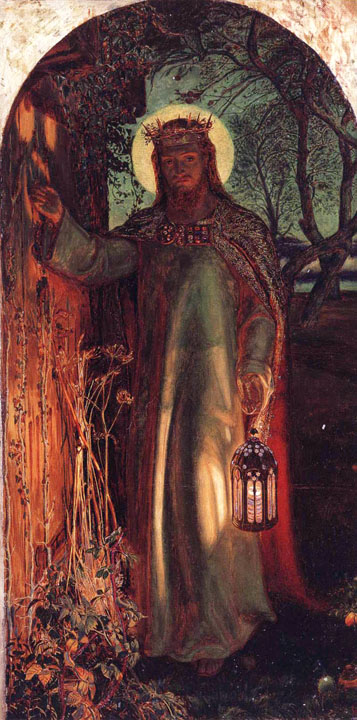
This brings me to the word seelie. With the world of FRPGs we associate this word strongly with fey creatures and their two rival courts who may or may not be benevolent toward humans. If we look at the etymology of the word, however, we find three very interesting meanings: happy, lucky and blessed. I am particularly interested in that last word, especially given this depiction of Christ by the Pre-Raphaelite William Hunt:


I defy anyone to deny that this doesn't have at least a passing resemblance to how Tolkien describes his high elves.

The word unseelie, therefore, means unholy. There are two primary examples of unholy beings that frequent the forests of Averoigne: vampires and lycanthropes. These two can be seen as men who have actively denied God's image and likeness within themselves. Vampires have chosen to seek immortality sans God and lycanthropes (literally wolf-men) have denied their own free-will to make moral choices — they give themselves over to being beasts and beings of pure instinct.

This suggests that the fey, rather than being faeries, elves, dwarves, goblins, etc. are actually bodiless powers (aka angels and demons) who either bless or corrupt normal human beings who then become elves, dwarves, goblins, etc. I imagine that the normal trajectory would look something like this:

  • A child is "touched" and begins to display outward signs of being an elf, dwarf or halfling.
  • This child would then never quite fit into normal human society. Society may even fear the child.
  • The child would then have three options: embrace their gift (and possibly get ostracized), hide their gift in order to fit in (the origin of half-elves?) or reject it.
  • Those that embraced their gift but are ostracized are tempted by unseelie fey to take revenge. Those that give in are twisted (the origin of orcs, etc.)
  • Those that reject their gift will also be tempted by the unseelie fey to do whatever it takes to get rid of their gift. These will also be twisted.
  • Subsequently, those that are twisted have two options: repent or no.
  • Those that refuse to repent become monsters.

The one wrench in this whole set-up is the elf, who is able to cast arcane magic. Given that arcane magic is naturally corruptive (especially when not done in conjunction with divine magic and/or the church), the origin of the elven "gift" is most likely not seelie. Quite possibly, the reason people fear the "touched" is due to the very reason that most, if not all, elves are unseelie from the outset…